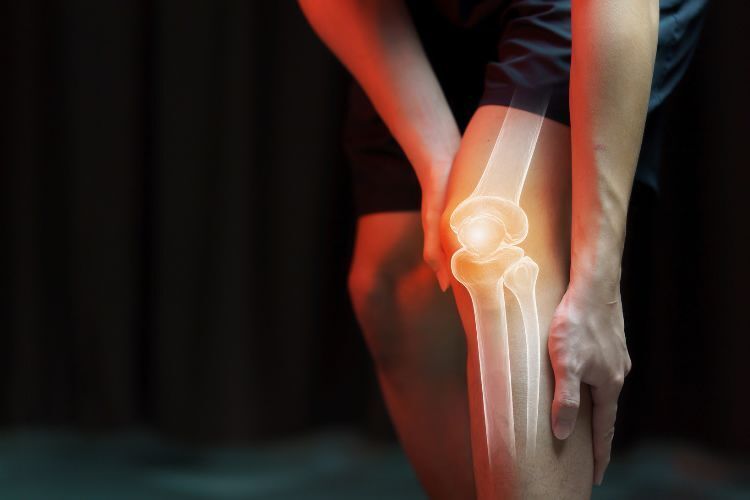
A swollen, tender knee that complains every time you kneel, climb stairs, or climb out of a car is often a sign of knee bursitis. It shows up in people who spend their workday on their knees, in runners who ramped up mileage too fast, and in plenty of people who can't point to any cause at all. At Pine Bush Health & Chiropractic in Walden, NY, we see this condition regularly, and we've learned that the sooner someone works out what is loading the knee, the sooner it settles. This guide covers what knee bursitis is, what it feels like, why it develops, and where chiropractic care fits in.
What Is Knee Bursitis?
Bursae are small, fluid-filled sacs that cushion the spots where bones, tendons, muscles, and skin glide past one another. Your knee has several. Knee bursitis means one of those sacs has become irritated and filled with extra fluid, which presses on nearby tissue and makes movement painful.
Bursitis in the knee usually involves one of three bursae:
- The prepatellar bursa, in front of the kneecap. Swelling here is often called housemaid's knee.
- The pes anserine bursa, on the inner side of the knee a few inches below the joint. Runners and people with knee arthritis tend to develop it.
- The infrapatellar bursa, just below the kneecap near the patellar tendon.
Knee Bursitis Symptoms: What It Feels Like
Common Signs of Bursitis in the Knee
Symptoms vary with the bursa involved, but most people notice a few of these:
- A soft, puffy swelling over the kneecap or on the inner knee
- Tenderness when you press on the spot or kneel
- Warmth and mild redness over the sore area
- Pain that builds with stairs, squatting, or standing up from a chair
- Stiffness after sitting for a while
Pain from the pes anserine bursa sits lower and more to the inside than pain from the kneecap bursa, which is one clue we use when sorting out what is going on.
Signs That Need a Medical Doctor First
An infected bursa, called septic bursitis, is a different matter and not something to manage at home or in a chiropractic office. If your knee is hot, red, and swollen, you have a fever or chills, or there's a cut or scrape near the swelling, get same-day medical care. Treatment involves antibiotics and sometimes drainage.
Sudden severe pain after a fall or twist, or a knee that locks or gives way, points to something other than bursitis and needs a proper exam.
What Causes Bursitis in the Knee?
Most causes come down to pressure, friction, or a direct hit. Repeated kneeling is the classic trigger, which is why gardeners, plumbers, roofers, and flooring installers get it so often. A fall onto the knee or a hard blow in contact sports can inflame the bursa in one event.
Overuse is the other major route. Runners and cyclists who add distance quickly can irritate the pes anserine bursa, especially when tight hamstrings and weak hip muscles let the knee drift inward with each stride. Health conditions raise the risk as well, including knee osteoarthritis, gout, and rheumatoid arthritis. The Mayo Clinic overview covers the full list of risk factors.
That mechanical piece is where a chiropractic exam adds value, because the knee is rarely the whole story.
How a Chiropractor Can Help With Knee Bursitis
An Evaluation That Looks Beyond the Knee
Dr. Michael Raucci, DC, DIBCN, ICCSP, starts with the knee but doesn't stop there. How your foot lands, how your hip and pelvis move, and how tight your hamstrings and quadriceps are all change the load on the bursae. Knee pain can also be referred from the low back, so when the picture doesn't add up, the exam includes the spine and nerve function. Dr. Raucci is a Diplomate in Neurology and a Certified Chiropractic Sports Physician.
Knee Bursitis Treatment Options at Our Clinic
Treatment is matched to how irritated the knee is that week. Depending on the exam, care at our clinic may include:
- Deep tissue massage for the quadriceps, hamstrings, and hip muscles that overload the knee
- Electric stimulation and therapeutic ultrasound to help calm pain and inflammation
- Kinesio taping to take pressure off irritated tissue
- Shockwave therapy for longer-standing cases that haven't settled with simpler care
- Mobilization or adjustment of the hip, pelvis, or spine when they restrict how the leg moves
We don't drain or inject bursae. If the swelling is large, keeps returning, or isn't improving, we coordinate with your primary care doctor or an orthopedic specialist.
Rehab and Exercises for Bursitis in the Knee
Calming the bursa is half the job. The other half is correcting the load that irritated it. Which exercises make sense depends on the bursa involved, so we build the plan after the exam. Most programs center on hamstring and quadriceps flexibility, hip and glute strength, and balance. Cycling and swimming usually keep people moving while the knee settles, and deep squats and lunges wait until kneeling no longer hurts.
Knee Bursitis Self-Care at Home
Small changes between visits make a real difference. Pause kneeling and any activity that provokes the pain. The American Academy of Orthopaedic Surgeons suggests icing for about 20 minutes, three or four times a day, with a cloth between the ice and your skin, and elevating the leg when you're sitting. Knee pads protect the bursa if kneeling is part of your job. A knee brace for bursitis, usually a simple sleeve, eases soreness for some people. If you take other medications, ask your doctor or pharmacist before using over-the-counter anti-inflammatories.
Knee Bursitis FAQs
Can a chiropractor help with knee bursitis?
Yes, when the bursa is inflamed rather than infected. A chiropractor can identify what is overloading the knee, ease pain and inflammation with hands-on care, and guide rehab. Infected bursitis needs a medical doctor.
How long does knee bursitis last?
Mild cases often settle within a few weeks once the trigger is removed. Recovery runs longer if you keep kneeling or running on it, or if arthritis or gout is involved.
Is walking good for knee bursitis?
Gentle walking is usually fine if pain stays low and the swelling doesn't increase afterward. Shorten or skip walks that flare it, and go easy on stairs and hills.
Do I need an X-ray or MRI for bursitis of the knee?
Not always, since a hands-on exam often points to the answer. Imaging helps when a fracture, meniscus tear, or ligament injury is possible, or when the knee isn't improving. Pes anserine pain can mimic a stress fracture, so we order imaging when the exam calls for it.
Get Knee Bursitis Care From a Walden Chiropractor
If knee swelling and pain have lingered for more than a week or two, or they keep coming back, an exam can sort out which bursa is irritated and why. Pine Bush Health & Chiropractic serves Walden, Montgomery, and the surrounding area. Call 845-744-8050 to schedule an evaluation with our team.